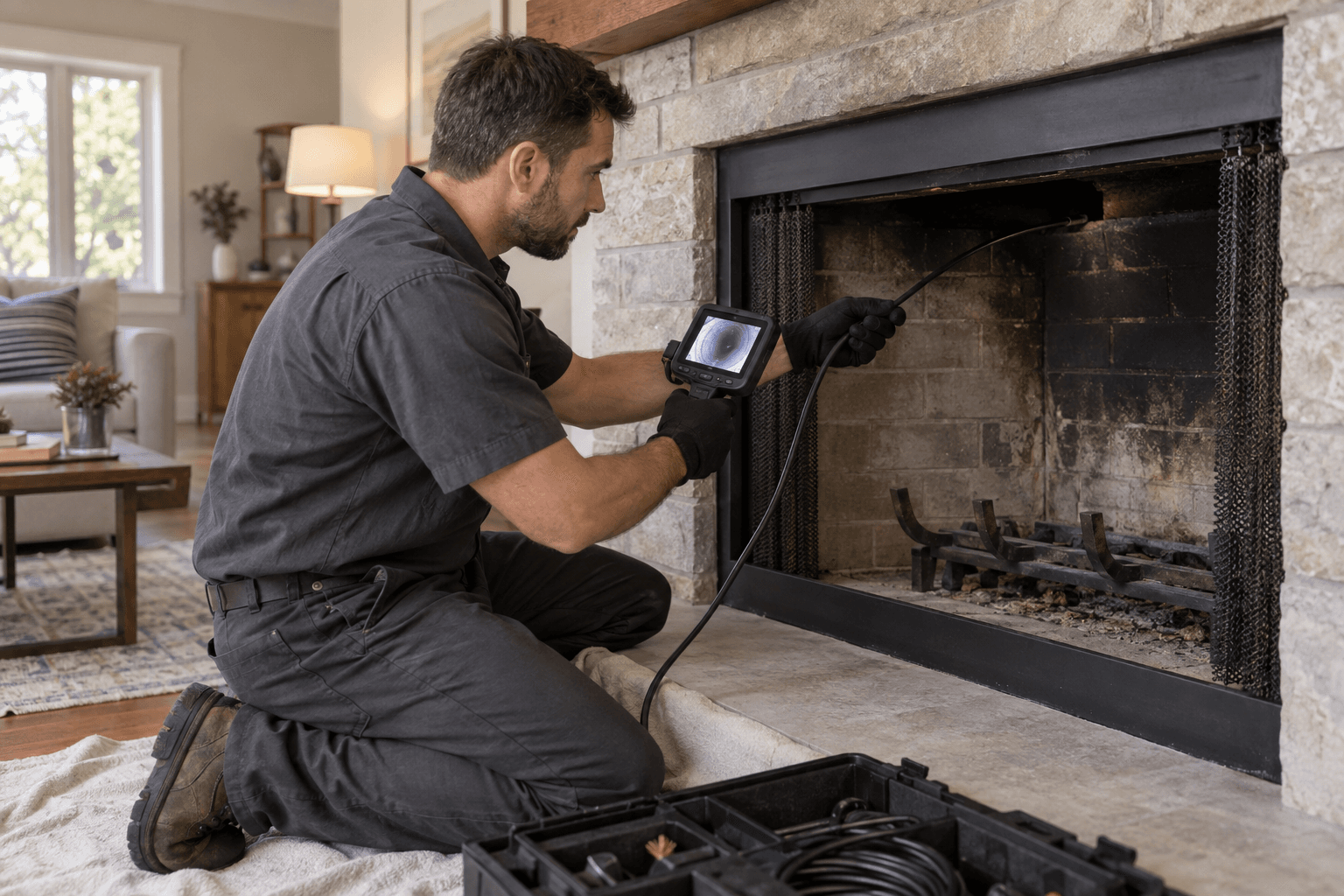
Address documented defects within the smoke chamber, flue or connector rather than treating every venting concern as a cleaning issue. The contractor should identify the appliance, fuel, chimney construction and access limitations before recommending work. Ask for photographs, written findings and a clear distinction between observed facts, likely causes and optional improvements.
Diagnostic frame
What the company needs to distinguish
Flue repair should name the defect and its location: separated clay joints, cracked tiles, damaged smoke chamber surfaces, corroded metal or failed connections are not interchangeable conditions.
A useful recommendation identifies what was directly observed, what remains an inference and which additional access or test would change the conclusion.
When to start a conversation
Signals that may justify this service
One sign rarely proves one defect. Document what changed and ask a contractor to explain the inspection or service needed to distinguish possible causes.
- Camera images show gaps or damage
- Smoke movement is irregular
- Falling liner fragments are found
The work sequence
How a well-defined visit can progress
- 01Map the defect with images and measurements
- 02Confirm appliance and fuel exposure
- 03Compare repair, resurfacing or relining options
- 04Prepare the substrate and connections
- 05Reinspect the completed combustion path
Scope anatomy
What a useful proposal can clarify
A proposal should be specific enough that another professional could understand the intended outcome and method. Exact inclusions vary with the system and property.
Ask whether the scope covers
- System and appliance identification
- Accessible-condition documentation
- Method, materials and exclusions
- Containment and cleanup plan
- Written findings and prioritized next steps
Why prices differ
Factors that can change the work
Price without scope is difficult to compare. Ask companies to identify assumptions and to explain which condition would trigger a written change.
- Defect length and position
- Access from top, bottom or openings
- Repair system and preparation
- Offsets and flue dimensions
- Connection and smoke-chamber work
Scope boundaries
What this service may not solve by itself
- A surface system cannot correct loose structure
- Partial repair needs clear start and stop points
- Product suitability depends on listed instructions
- Post-work documentation should show concealed results
Interview the contractor
Questions worth asking before booking
- 01What evidence supports this scope?
- 02Which areas will and will not be assessed?
- 03What product, method or standard informs the work?
- 04What documentation will I receive at completion?