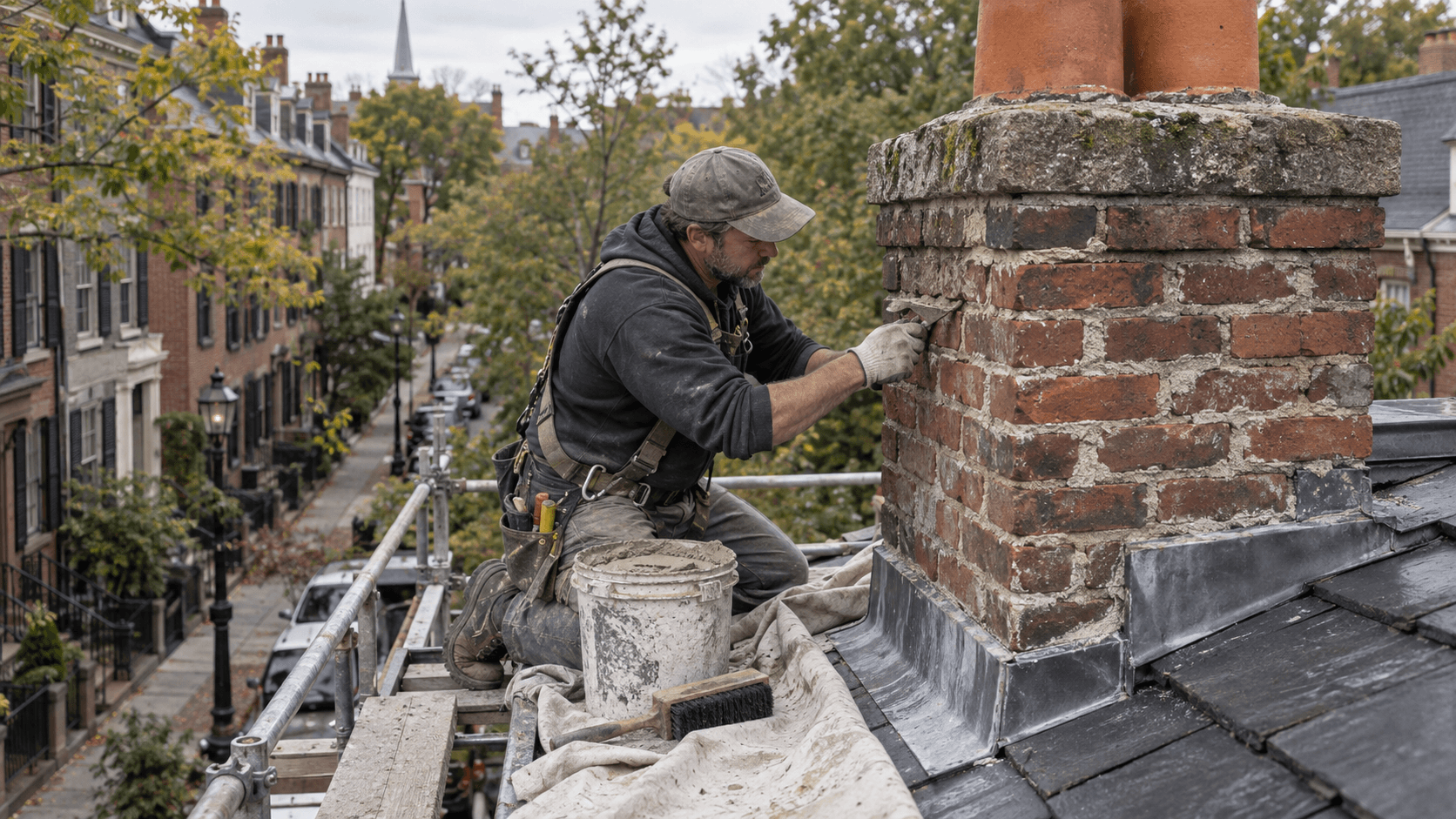
Compare crown repair, tuckpointing, brick replacement and rebuilding by cause, preparation and compatible materials. The contractor should identify the appliance, fuel, chimney construction and access limitations before recommending work. Ask for photographs, written findings and a clear distinction between observed facts, likely causes and optional improvements.
Diagnostic frame
What the company needs to distinguish
The crown, brick and mortar form a weather-exposed assembly. Effective work considers crown slope and overhang, top-flue details, joint erosion, masonry absorption and any movement rather than sealing only the most visible crack.
A useful recommendation identifies what was directly observed, what remains an inference and which additional access or test would change the conclusion.
When to start a conversation
Signals that may justify this service
One sign rarely proves one defect. Document what changed and ask a contractor to explain the inspection or service needed to distinguish possible causes.
- Mortar is recessed or sandy
- Brick faces are spalling
- The crown has open cracks
The work sequence
How a well-defined visit can progress
- 01Survey crown geometry and masonry loss
- 02Check cap, flue and flashing interfaces
- 03Remove unsound material to defined limits
- 04Install compatible repair materials
- 05Verify water shedding and document finish
Scope anatomy
What a useful proposal can clarify
A proposal should be specific enough that another professional could understand the intended outcome and method. Exact inclusions vary with the system and property.
Ask whether the scope covers
- System and appliance identification
- Accessible-condition documentation
- Method, materials and exclusions
- Containment and cleanup plan
- Written findings and prioritized next steps
Why prices differ
Factors that can change the work
Price without scope is difficult to compare. Ask companies to identify assumptions and to explain which condition would trigger a written change.
- Patch, overlay or replacement scope
- Brick replacement and matching
- Mortar removal depth
- Scaffold or lift access
- Flue and cap removal or reset
Scope boundaries
What this service may not solve by itself
- A thin surface smear can fail quickly
- Hard mortar may damage softer historic brick
- Crown coatings do not rebuild unstable edges
- Recurring cracks may indicate movement
Interview the contractor
Questions worth asking before booking
- 01What evidence supports this scope?
- 02Which areas will and will not be assessed?
- 03What product, method or standard informs the work?
- 04What documentation will I receive at completion?