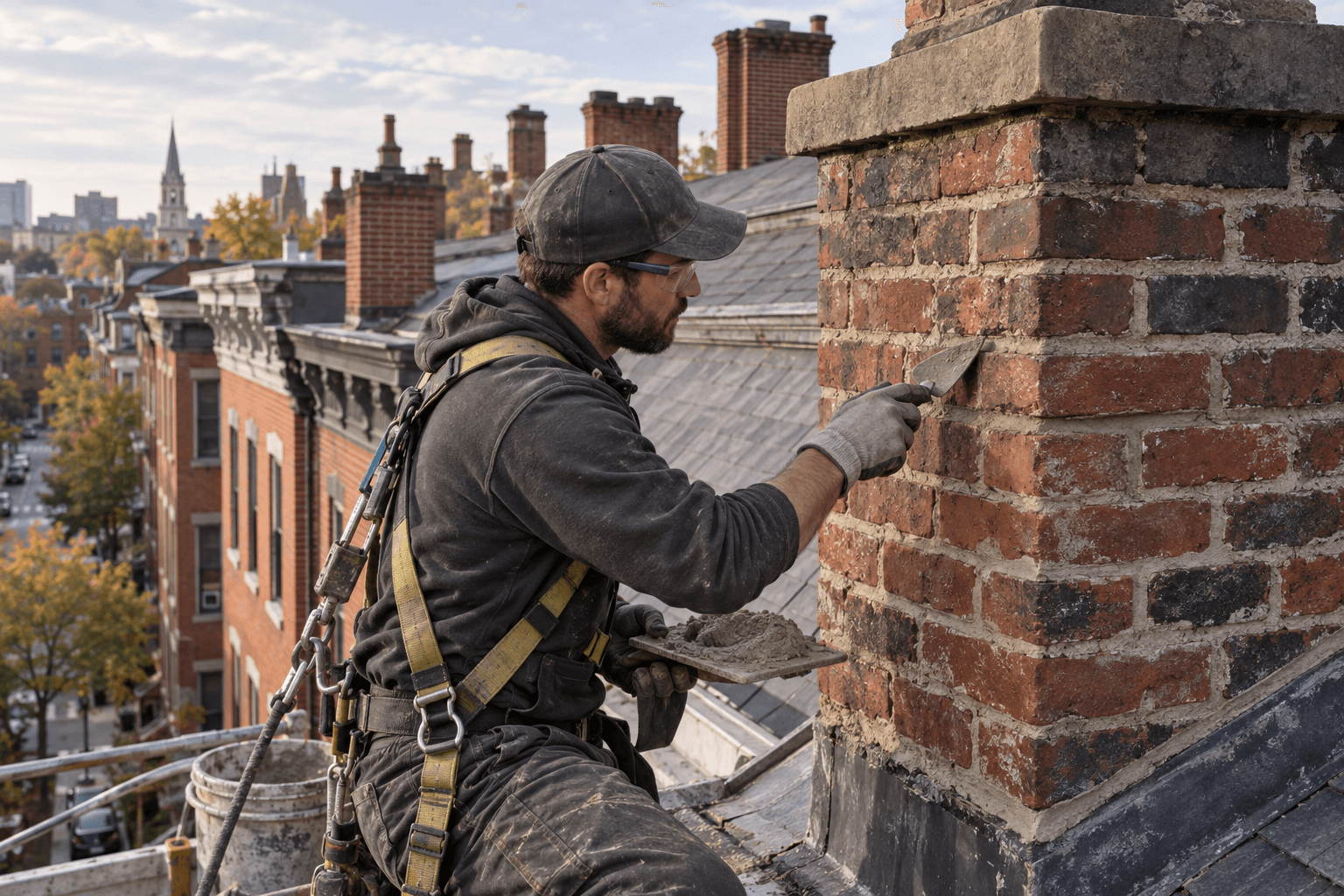
Chimney repair can mean repointing a few mortar joints, rebuilding an unstable stack, replacing a crown or correcting flashing. Those are very different jobs. A useful proposal identifies the defect, explains the proposed method and materials, and distinguishes repair from cosmetic concealment.
When to start a conversation
Signals that may justify this service
One sign rarely proves one defect. Document what changed and ask a contractor to explain the inspection or service needed to distinguish possible causes.
- Mortar is missing, sandy or deeply eroded
- Brick faces are flaking or breaking away
- The stack leans or shows stepped cracking
- The crown is cracked or holds water
- Ceilings or chimney breasts show damp staining
Scope anatomy
What a useful proposal can clarify
A proposal should be specific enough that another professional could understand the intended outcome and method. Exact inclusions vary with the system and property.
Ask whether the scope covers
- Diagnosis of the likely water or movement path
- Description of removal and preparation work
- Mortar and masonry compatibility details
- Flashing, crown and cap interfaces
- Access method, debris handling and warranty terms
Interview the contractor
Questions worth asking before booking
- 01What caused the damage?
- 02Which materials will be removed and replaced?
- 03How will new mortar be matched to the existing masonry?
- 04Does the scope include flashing and crown interfaces?