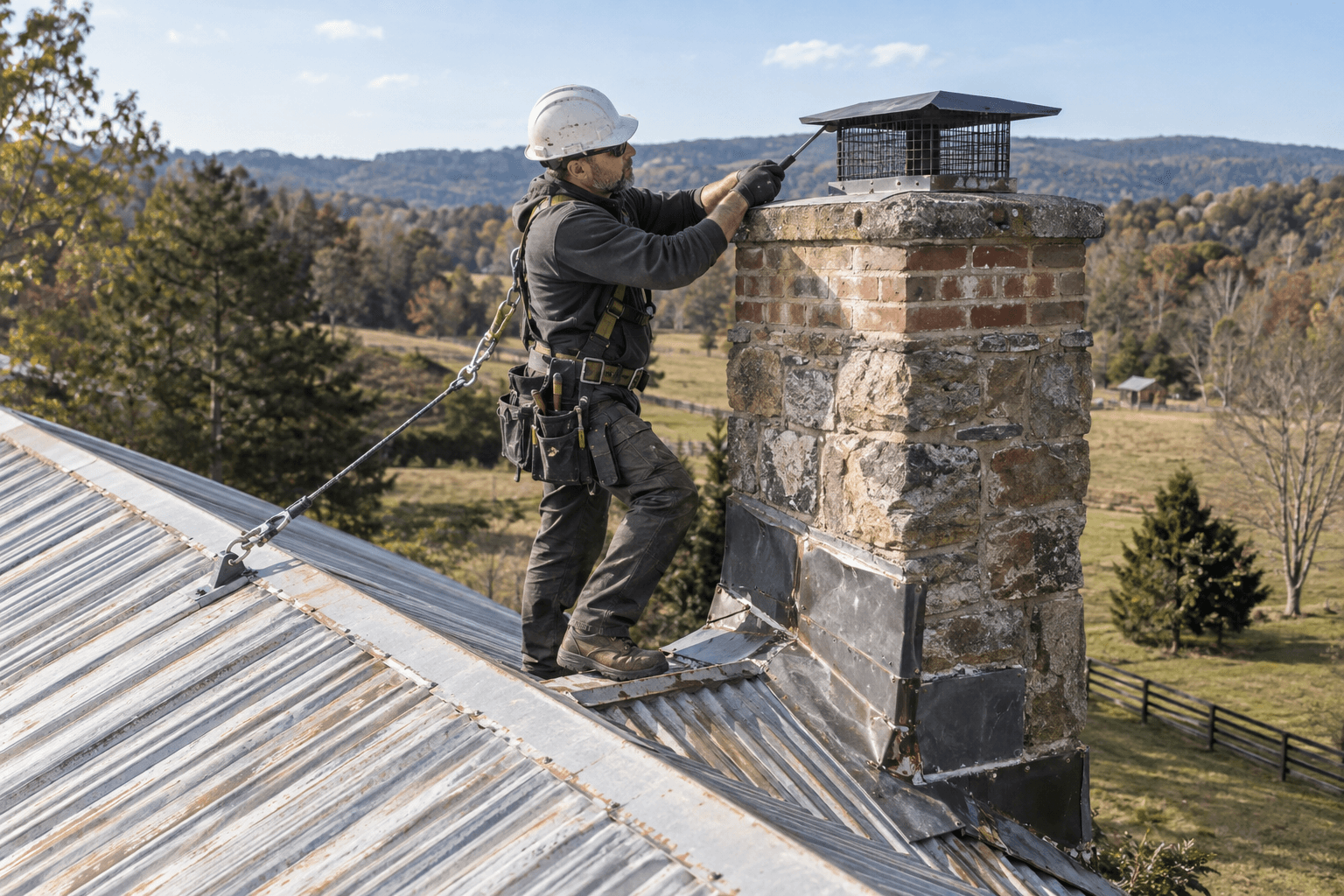
A liner contains combustion products, while caps, crowns, flashing and appropriate masonry treatments manage weather exposure. One component cannot compensate for every other defect. Ask for evidence showing why the proposed component is needed and how it fits the appliance, flue and building.
When to start a conversation
Signals that may justify this service
One sign rarely proves one defect. Document what changed and ask a contractor to explain the inspection or service needed to distinguish possible causes.
- Tiles are cracked, displaced or missing
- A cap is absent or damaged
- Rust, efflorescence or recurring dampness appears
- The appliance is being changed
- Draft or sizing problems are suspected
Scope anatomy
What a useful proposal can clarify
A proposal should be specific enough that another professional could understand the intended outcome and method. Exact inclusions vary with the system and property.
Ask whether the scope covers
- Appliance and venting compatibility check
- Liner material, diameter and termination details
- Cap and crown dimensions and attachment method
- Flashing and water-shedding review
- Product, workmanship and maintenance information
Interview the contractor
Questions worth asking before booking
- 01What evidence supports this recommendation?
- 02How was liner size selected?
- 03What existing defects must be corrected first?
- 04What maintenance or inspection does the system require?