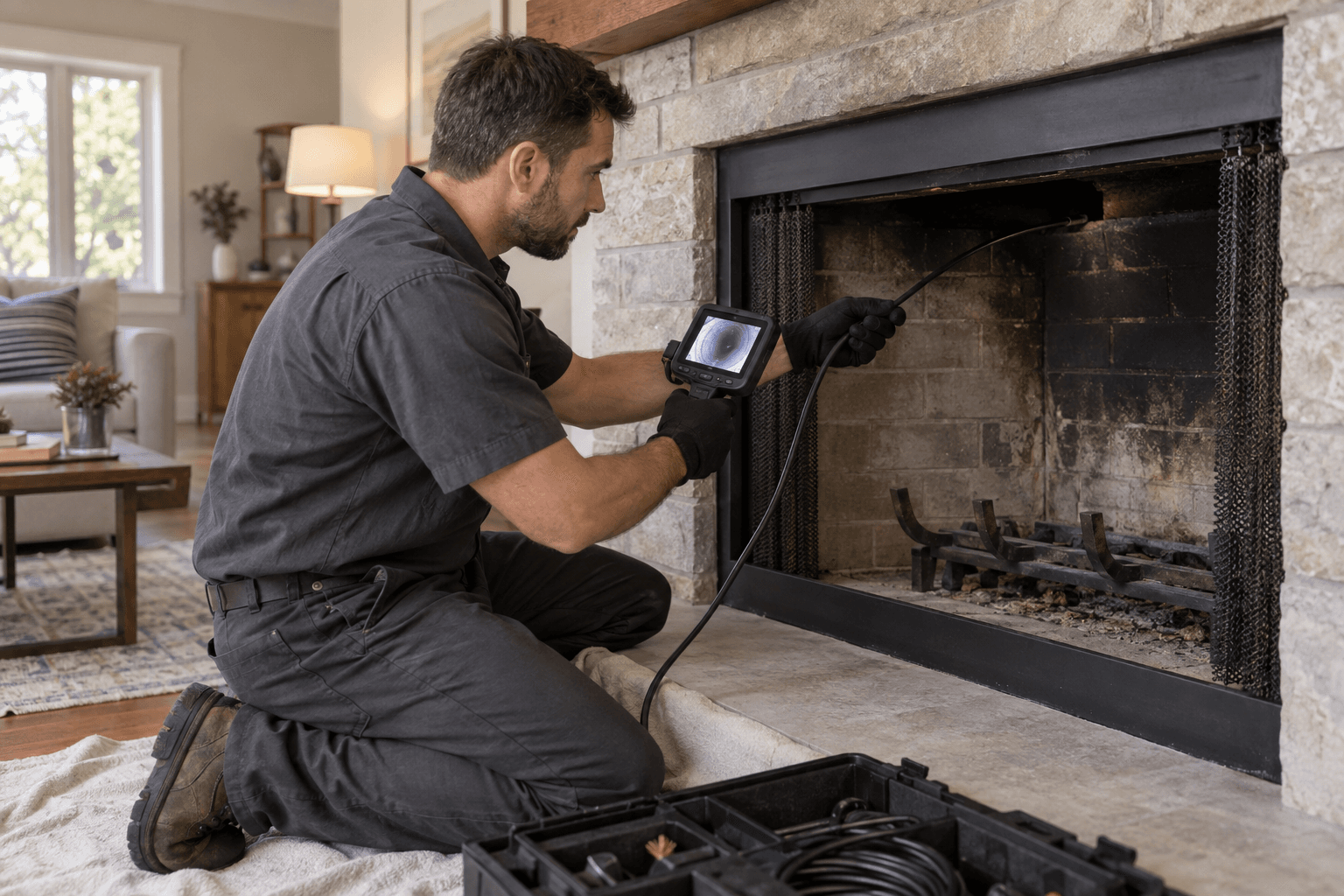
Inspection scope should match the reason for the visit. A routine observation, a property transaction, a suspected fire event and concealed damage do not call for the same level of investigation. Ask the chimney contractor to explain what will be visible, whether internal video scanning is included and how limitations will be reported.
Diagnostic frame
What the company needs to distinguish
Inspection scope should follow the reason for the visit. Routine use, a property transfer, an appliance change, a performance problem and a suspected chimney fire create different access and documentation needs.
A useful recommendation identifies what was directly observed, what remains an inference and which additional access or test would change the conclusion.
When to start a conversation
Signals that may justify this service
One sign rarely proves one defect. Document what changed and ask a contractor to explain the inspection or service needed to distinguish possible causes.
- You are buying or selling a home
- The chimney has not been used for a long time
- There was a chimney fire or severe overheating event
- Smoke enters the room
- Water staining, cracking or movement is visible
The work sequence
How a well-defined visit can progress
- 01Record the reason for inspection
- 02Identify the system and connected appliances
- 03Agree the inspection level and access
- 04Observe exterior, interior and accessible concealed areas
- 05Issue findings with photos, limitations and priorities
Scope anatomy
What a useful proposal can clarify
A proposal should be specific enough that another professional could understand the intended outcome and method. Exact inclusions vary with the system and property.
Ask whether the scope covers
- Appliance, connector and accessible flue observations
- Exterior stack, crown, cap and flashing review where accessible
- Draft and obstruction considerations
- Camera scanning when included in the agreed scope
- Photographic findings with repair priorities
Why prices differ
Factors that can change the work
Price without scope is difficult to compare. Ask companies to identify assumptions and to explain which condition would trigger a written change.
- Inspection level
- Number of flues and appliances
- Roof and attic access
- Video-scanning requirements
- Need for specialized access or testing
Scope boundaries
What this service may not solve by itself
- An inspection reports conditions; it does not automatically include cleaning
- A camera cannot see through deposits or solid obstructions
- Not every concealed area is accessible
- Code observations are not the same as approval by an authority
Interview the contractor
Questions worth asking before booking
- 01What inspection level is included?
- 02Will the entire flue interior be scanned?
- 03Which areas cannot be accessed?
- 04Will urgent safety concerns be separated from maintenance recommendations?