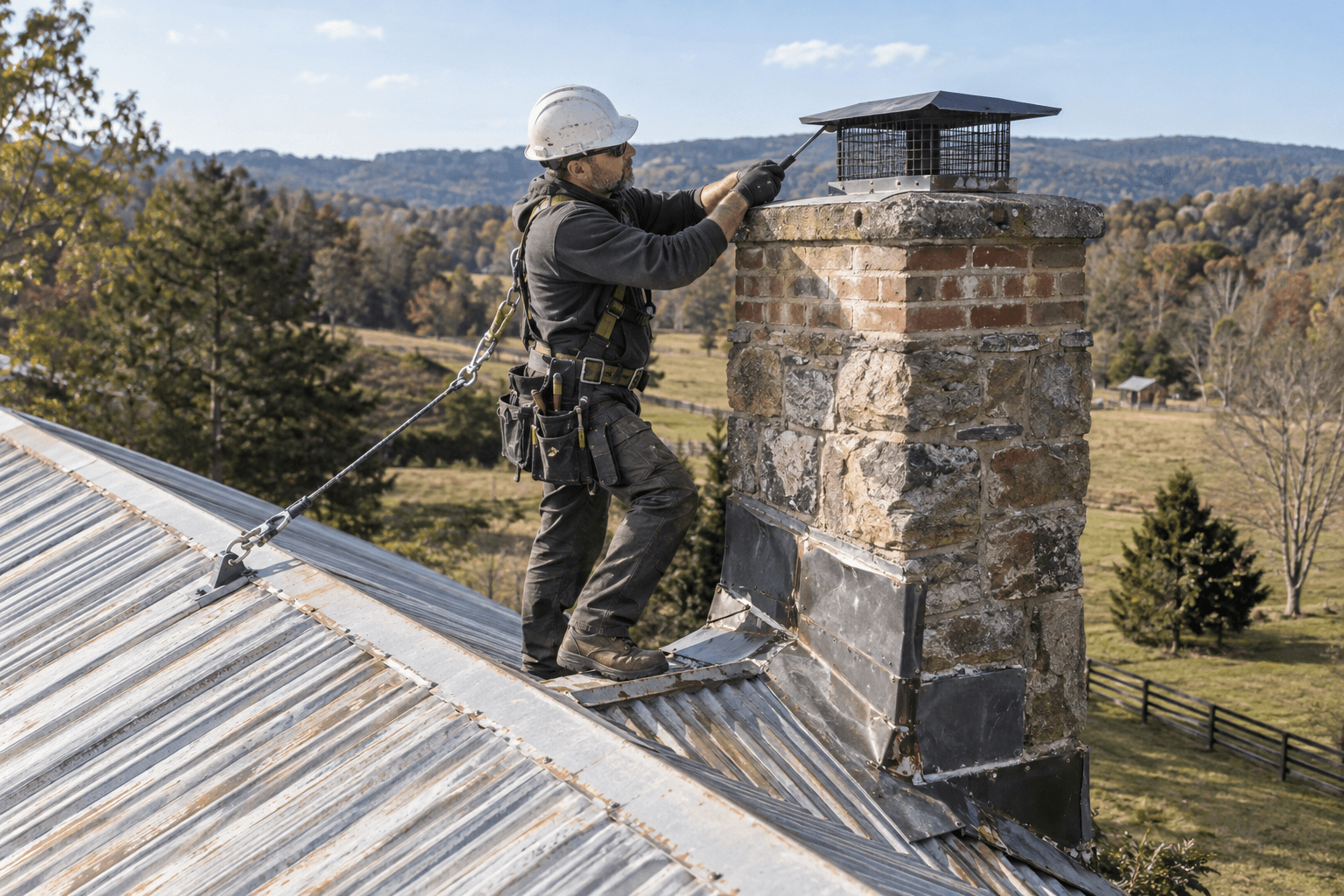
Chapter 01
Do not test an unknown system with fire
Long idle periods can hide nests, debris, corrosion, altered connections or deterioration. Identify the appliance and arrange appropriate inspection before use.
Write down what you know and what remains uncertain. Photos taken from safe, accessible areas and dated service records give the professional a stronger starting point.
- Identify the appliance and fuel
- Record dates and symptoms
- Preserve manuals and prior reports
- Avoid roof access or improvised testing
Chapter 02
Restore records and alarms
Locate manuals and prior reports if available. Maintain smoke and carbon-monoxide alarms according to their instructions and keep the system unused until concerns are resolved.
A useful company explains the limits of the visit, separates urgent conditions from maintenance, and supplies a record you can keep with the property.
- Request a written scope
- Ask what evidence supports recommendations
- Confirm exclusions and cleanup
- Retain photographs, invoice and warranty
Chapter 03
Questions to take to the appointment
Good questions turn general advice into a property-specific plan. Ask what the professional observed, which alternatives were considered, what remains inaccessible and what would change the recommendation.
For large repairs or unclear diagnoses, compare another qualified opinion using the same facts. Never let educational content replace emergency services or an on-site professional assessment.
- What is observed versus inferred?
- Is the appliance safe to use while deciding?
- Which action comes first and why?
- How will the completed work be documented?
Takeaway checklist
- Write a one-page system history
- Photograph accessible conditions safely
- List symptoms and timing
- Confirm the service scope
- Verify current company information
- Save the final report and photos